


Book reviews
Review of The Twelve Steps for Agnostics by Andy F.
Posted on June 24, 2026, tagged as
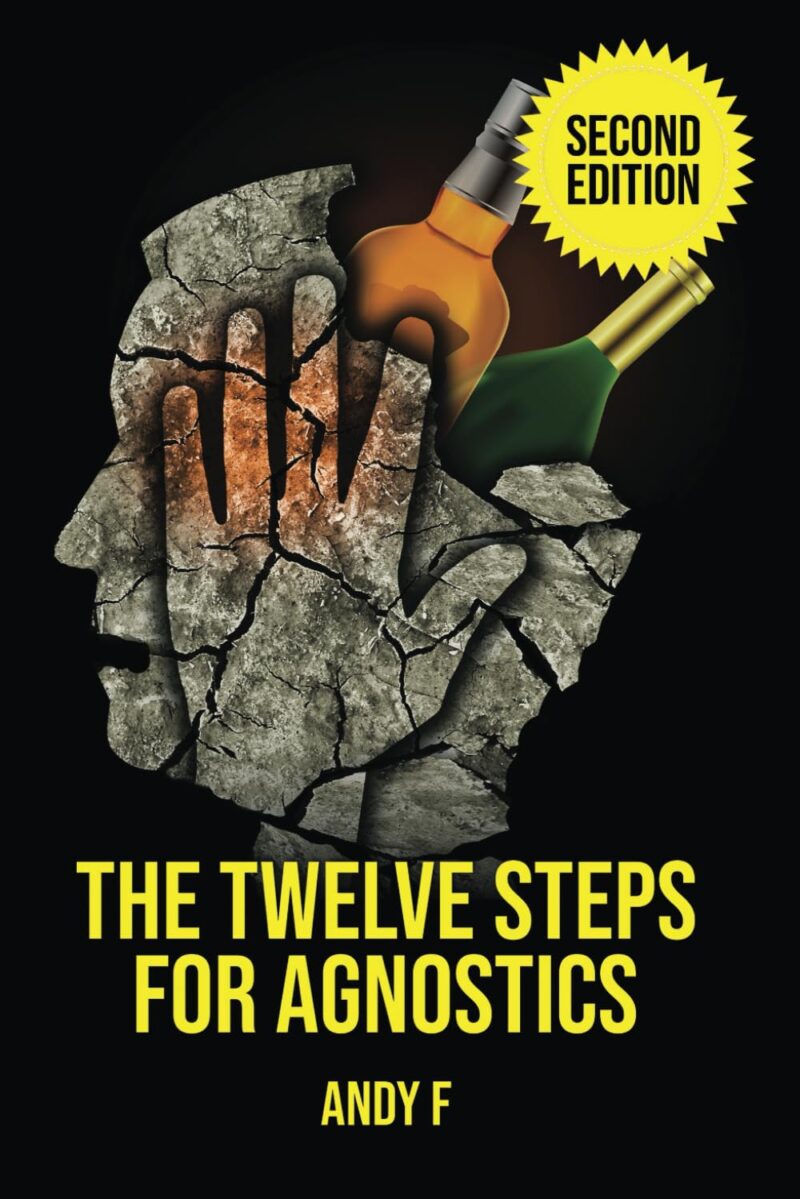
In the Big Book of Alcoholics Anonymous, a recovery plan is proposed that is based on reliance on a higher power. God is mentioned over one hundred times, and statements such as “God has done for us what we could not do for ourselves” are found. For many people, the idea of God is either confusing, distasteful, or beyond comprehension. The program accommodates such people by using such language as “God as you understand Him.” For many, this is helpful, but for others, using such a God-based program is a struggle, often resulting in such people giving up on AA. Many books have been written to help people who do not believe in God stick around in AA until it works for them. Possibly the best of these is this book written by Andy F.
In The Twelve Steps for Agnostics, Andy tells his own story of addiction, emotional illness, and his long and ultimately successful struggle to find recovery within the rooms of Alcoholics Anonymous. He holds nothing back in relating the raw truth about what his life in addiction was like, and how he fought the AA program because of his perception that AA required a belief in a Big Guy in the Sky type of God. But he never gave up despite multiple relapses, mental health hospitalizations, and detox admissions to hospitals, all symptomatic of his failure to “get the program.” Andy’s salvation came from his persistent seeking of the answer, refusing to be defeated.
Andy stresses as important a reliance on the AA program, the twelve steps, and having a humble, wise, and compassionate sponsor. He goes through all twelve steps, explaining how they may be successfully utilized by an agnostic. Regarding step seven, he says that “In the absence of a belief in God, humility itself is the power greater than ourselves that helps with the removal of our shortcomings.” Regarding step eleven, he says, “We may wonder what we are praying to. Is anyone listening? When we pray, we are listening. Prayer is a direct communication with the healthy part of us that agreed to get sober in the first place. Prayer subdues the inner dialogue of the negative ego.” This is the most insightful and sensible argument for prayer for an agnostic that I have encountered. Among other things I like about this book is that anyone, atheists, agnostics, and God-believing people of all persuasions, will find valuable insight and understanding in its pages. I recommend this book for any serious student of twelve-step recovery, whether one is in recovery or working with others in recovery.
There are a number of other valuable books written to assist agnostics and atheists in finding acceptable comfort within the twelve-step rooms. I list a few, but there are others as well.
Beyond Belief: Agnostic Musings for 12 Step Life – Finally, Daily Reflections for Nonbelievers, Freethinkers, and Everyone, by Joe C.
A History of Agnostics in AA, by Roger C.
Staying Sober without God: The Practical 12 Steps to Long-Term Recovery from Alcoholism & Addictions, by Jeffery Munn
The Alternative 12 Steps: A Secular Guide to Recovery, by Martha Cleveland, PhD, and Arlys G.
At the risk of seeming to (or actually) blow my own horn, I include my own book, which I directed not just to atheists and agnostics, but to anyone unsure of what or how to think about a higher power, God or otherwise. Seeking a Higher Power: A Guide to the Second Step, by Michael Cowl Gordon